

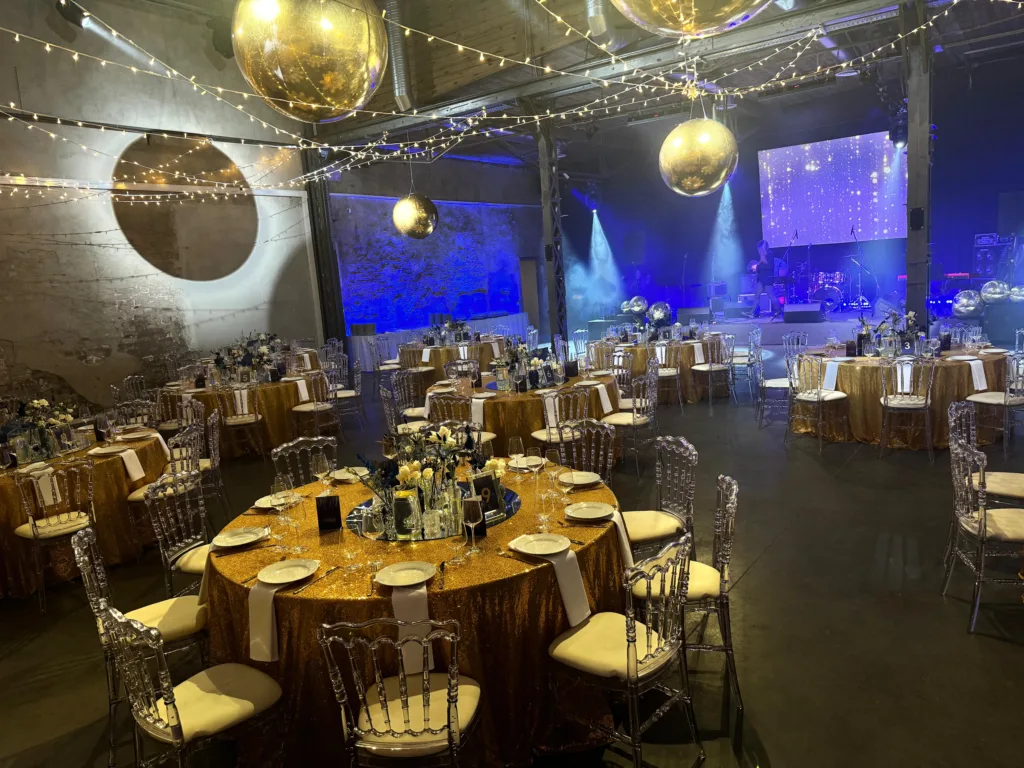
The quick answer: In Latvia, renting event decor usually pays off when you’d use an item fewer than 4–6 times a year, or when storing, transporting and repairing it would cost more than renting. Buying makes sense for small, sturdy, branded items you reuse every month. Bon Events rents out ready-to-use decor across the Baltics, so venues and agencies don’t have to own and store it.
This guide is for venues, event agencies and in-house corporate teams in Riga and the wider Baltics. It looks at the real cost of owning decor, which trends are pushing the market towards rental, and where buying still wins. It ends with a checklist of items that are almost always better rented.
What trends are driving the shift from buying to renting event decor?
Three things are moving event decor towards rental: a growing events market, rising pressure to cut waste, and clients who want a new look every season. Agencies and venues that bought large decor sets five years ago now find that much of it is out of style, damaged or stuck in storage.
The market itself keeps growing. Allied Market Research valued the global events industry at $1,135.4 billion in 2019 and projected it would reach $1,552.9 billion by 2028. More events mean more demand for decor, but not necessarily more ownership. Organisers increasingly treat furniture, lighting and backdrops like a service instead of an asset.
Sustainability is the second driver. According to Eurostat, the average EU resident generated 513 kg of municipal waste in 2022. Single-use event decor adds directly to that number. Corporate clients in Latvia now often ask agencies about reuse and waste as part of their ESG reporting. Rented decor that goes back to a warehouse and gets used again is the easiest answer to give.
The third driver is visual turnover. A chandelier ceiling or a drapery backdrop that looked fresh at a 2023 gala can feel repetitive to the same guests at the 2026 one. In the Baltic market, where many corporate clients attend each other’s events, a “seen it before” setup is a real reputational risk for agencies.
How much does owning event decor really cost compared with renting it?
The purchase price is usually less than half of what owning event decor really costs. Storage, transport, cleaning, repairs and the labour to manage it all make up the rest. When teams compare rental against the sticker price alone, they almost always underestimate how much owning costs.
Each cost works like this:
- Storage: Bulky items such as arches, columns, stands and furniture need dry, heated warehouse space. Latvian winters damage textiles, wood and electronics kept in unheated garages or containers.
- Transport: Each event needs a van, loading crew and packing materials. Without proper flight cases, fragile items like crystal chandeliers and candelabras break.
- Wear and repair: Chairs get scratched, drapery gets stained, LED fittings fail. Somebody has to inspect, clean and fix everything between events.
- Assembly know-how: Large constructions need trained crew and the right tools. Rental companies bring both.
- Opportunity cost: Money tied up in decor is money you can’t spend on marketing, staff or the venue itself.
A practical rule of thumb used in the rental industry is that one rental costs a fraction of the item’s retail price. That means the break-even point usually comes after several uses, not one or two. Once you add the hidden costs above, break-even moves further out. Many owned items never reach it.
| Cost factor | Buying decor | Renting decor |
|---|---|---|
| Upfront cost | Full retail price, paid immediately | Per-event fee only |
| Storage | Your warehouse, all year, heated | Included – stored by the rental company |
| Transport & packing | Own van, crew and flight cases | Delivery and pickup can be booked as a service |
| Wear, cleaning, repair | Your responsibility and budget | Handled by the rental company between events |
| Style flexibility | Locked into what you own | New look for every event or season |
| Scale | Limited to your inventory | From 10 to 500+ guests on short notice |
| Best for | Small, durable, branded, used monthly | Large, fragile, seasonal or trend-driven items |
How often do you need to reuse decor before buying pays off?
Buying usually only pays off when you reuse an item regularly, often monthly or more, in the same style, for at least two to three years. If an item comes out of storage only a few times a year, renting is almost always cheaper once storage and handling are counted.
To work out your own break-even point, take the purchase price, add a realistic yearly cost for storage, transport and repairs, and divide by the rental fee per event. That tells you how many events a year you need to break even. Then ask honestly whether you will really use the item that often, and whether clients will still want that style in two years.
Weddings show this clearly. The Knot’s 2023 Real Weddings Study put the average US wedding cost at $35,000, and a large share of that goes to decor, florals and rentals. Couples buy decor for one day. That’s why almost nobody, in Latvia or elsewhere, buys wedding arches, charger plates or ceremony chairs outright. Wedding planners use the same logic: each couple wants a different style, so a fixed inventory loses value quickly.
“As event planners often note, the most expensive decor in the warehouse is the piece you bought for one client and never used again. Rental lets you say yes to every concept without adding another pallet to storage.”
Which types of organisations should rent, and which should buy?
Event agencies and companies that run a few events a year should rent most of their decor. Venues with a fixed interior style may buy a small core set and rent everything else. How often you hold events and how much the style changes between them matter more than your budget.
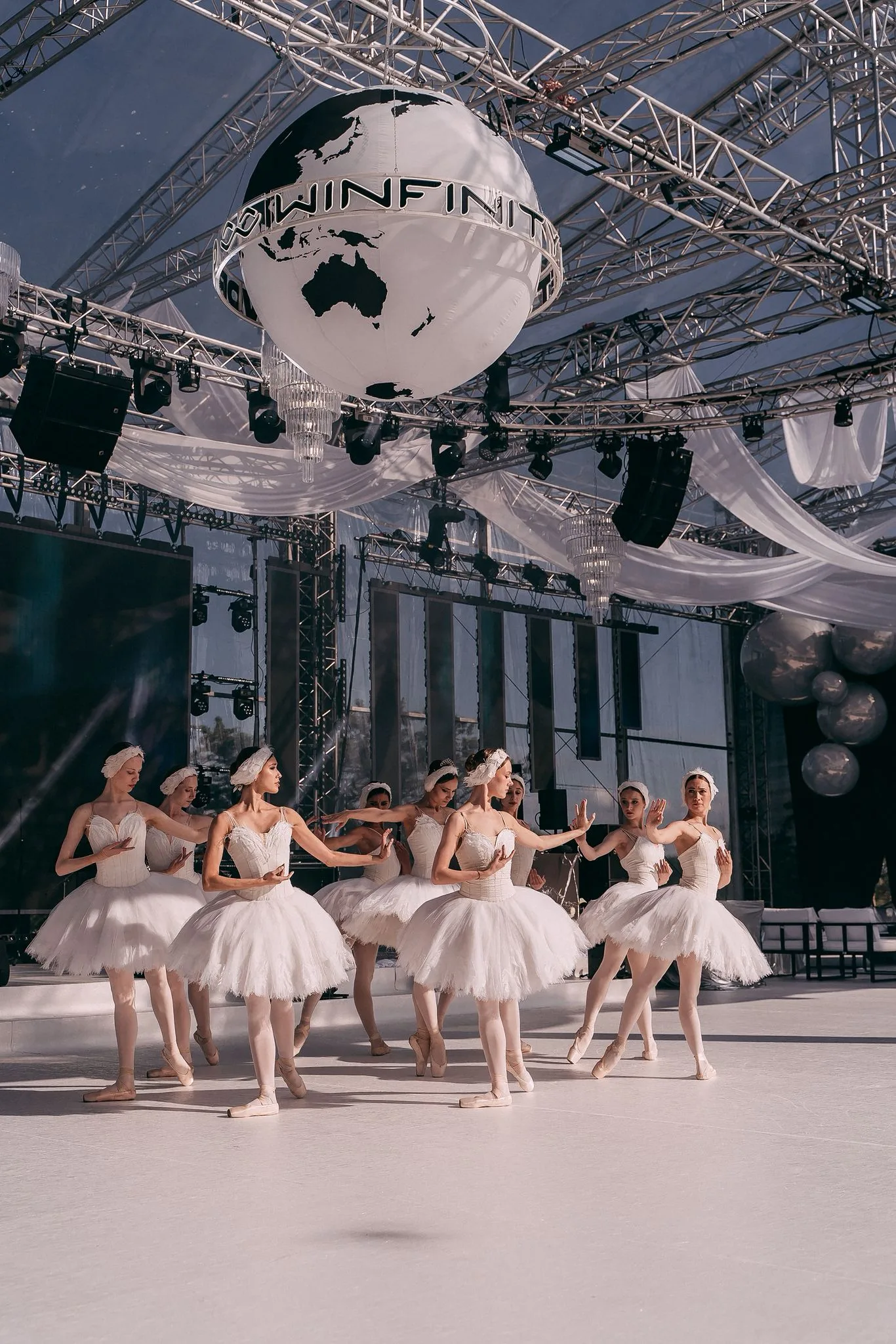
Event agencies work with constantly changing concepts: a car launch one week, a pharma conference the next, a New Year’s party after that. A fixed inventory rarely fits all of them. Rental lets them pitch bigger ideas. Road-show formats like the Coral Travel Road show show how rented constructions and decor can be set up again in several cities without the agency owning a single piece.
Venues and hotels in Riga, Jūrmala and Sigulda often own their basic banquet furniture, because it is used almost every weekend. They gain more by renting statement pieces, such as chandeliers, ceiling decor, arches and themed props, that make each event feel different. Their storage stays small and they can still offer premium packages.
Corporate teams running two to six events a year, such as a summer party, a conference, an anniversary and a Christmas event, almost never get to break-even on purchased decor. Anniversary celebrations like the Amber Jet 10th anniversary show how much visual impact rented decor can deliver for a one-off milestone. For full planning steps, see our guide on how to organize a corporate event in Latvia.
When does buying or custom production make more sense than renting?
Buying or custom production makes sense for branded items, unique pieces built around your company’s identity, and small decor you use at nearly every event. In those cases, owning gives you consistency and control that rental can’t.
Typical examples include branded backdrops with your logo, recurring exhibition stand elements, and signature props tied to a long-running campaign. For these, production of decorations to your specification is often the better choice. Bon Events can also store produced items between events, which removes the main downside of owning them.
A hybrid model works best for many Baltic companies: own the branded core, rent the volume. Tables, chairs, lighting, drapery and seasonal decor come from a rental catalogue, while one or two custom elements carry the brand. For a fully bespoke concept that mixes both, see our custom event decor service.
Which event decor items are almost always better rented?
Large, fragile, seasonal and trend-driven items are almost always better rented, because they cost the most to store and transport and lose value fastest. Use the checklist below before you buy anything for your next event.
| Item | Why rent instead of buy | Rent? |
|---|---|---|
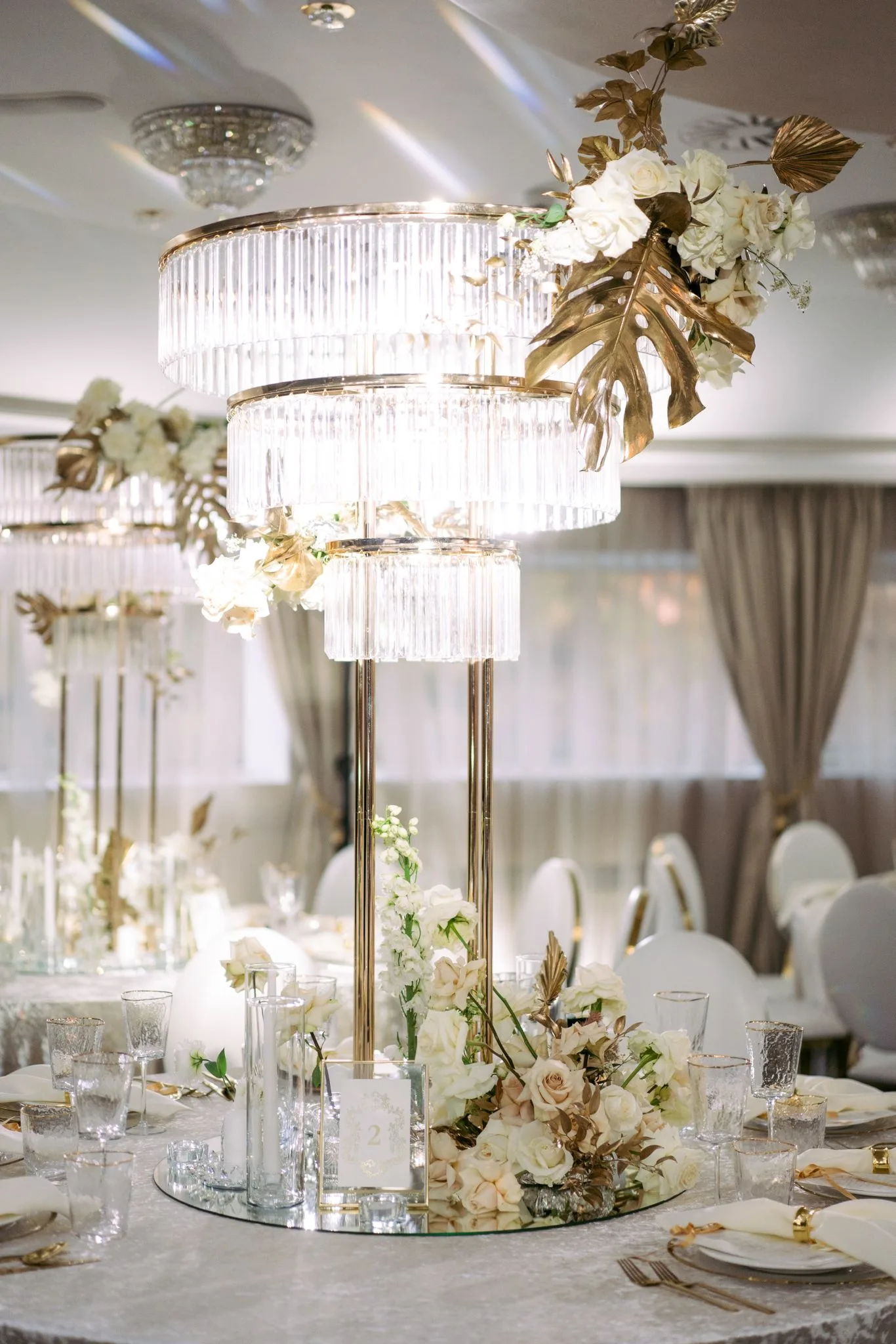
| Chandeliers and crystal ceiling decor | Fragile, need flight cases and rigging skills, rarely needed monthly | ✅ Always |
| Arches and large constructions | Bulky to store, need assembly crew and tools | ✅ Always |
| Draperies and backdrops | Need professional cleaning and steaming after every event | ✅ Almost always |
| Event chairs in large quantities | Volume changes from event to event; storing 200 chairs takes a lot of space | ✅ Almost always |
| Artificial decor and seasonal props | Trend-driven, used for a few weeks per year (Christmas, Halloween, Līgo) | ✅ Almost always |
| Charger plates and tableware sets | Styles change by wedding and season; breakage adds up | ✅ Usually |
| Branded backdrops and logo elements | Unique to your company and reused often | ❌ Produce and own |
Drapery is a good example of hidden ownership costs. It looks simple until you need to clean, steam and hang 30 metres of it before an event. Our article on drapery backdrop rental for stages and head tables in Riga covers what proper rigging involves.
Frequently Asked Questions
Is it cheaper to rent or buy event decor in Latvia?
For most venues, agencies and companies, renting is cheaper unless you use the same item in the same style at least monthly for several years. Once storage, transport, cleaning and repairs are included, owning usually costs far more than the purchase price suggests.
What is included in dekoru noma (decor rental)?
Decor rental (dekoru noma or dekorāciju noma) usually covers use of the items for an agreed period, with optional delivery, setup and dismantling. Cleaning and maintenance between events are handled by the rental company, so you receive items ready to use.
How far in advance should I book decor rental in Riga?
For standard items, two to four weeks is usually enough. For the busy wedding season (June–September) and the December corporate party season, book six to eight weeks ahead, especially for chandeliers, arches and large furniture quantities.
Can I rent decor for events outside Riga or in Estonia and Lithuania?
Yes. Rental decor can be delivered across Latvia and to other Baltic countries, and road-show formats can move the same setup between several cities. Transport and setup costs depend on distance and how much is being delivered.
What happens if rented decor gets damaged during my event?
Normal wear is expected and covered by the rental company. Serious damage or loss is usually charged according to the rental agreement, so check the terms and make sure guests and venue staff handle fragile items, such as chandeliers and glassware, carefully.
Is renting decor more sustainable than buying it?
Generally yes. Rented decor is reused at many events instead of being thrown away after one, which reduces waste and the demand for new materials. That helps companies with ESG commitments and is a growing priority for corporate clients across the Baltics.
Planning an event and not sure whether to rent or buy? Browse the Bon Events rental catalogue, from chairs to chandeliers, or contact our team for a decor plan and quote for your corporate event, wedding or private celebration anywhere in the Baltics.